- Focus
- Posts
- Strategic Business Opportunities in the UK's New Industrial Strategy: Early Mover Advantages
Strategic Business Opportunities in the UK's New Industrial Strategy: Early Mover Advantages

As Rachel Reeves, Chancellor of the Exchequer, and Jonathan Reynolds, Secretary of State for Business and Trade, unveil "Invest 2035" - the UK's ambitious new industrial strategy - a transformative opportunity emerges for businesses ready to seize it. With its unprecedented focus on long-term stability and £50-60 billion in annual investment potential for clean energy alone, this strategy marks a decisive shift from the policy turbulence of the past decade.
A Strategic Shift: The Opportunity Landscape
The UK government's proposed industrial strategy marks a significant shift in economic policy, emphasizing long-term stability and sector-specific support. For businesses willing to engage early and adapt their strategies accordingly, this framework presents unprecedented opportunities for sustainable growth and development.
Key Strategic Considerations for Businesses
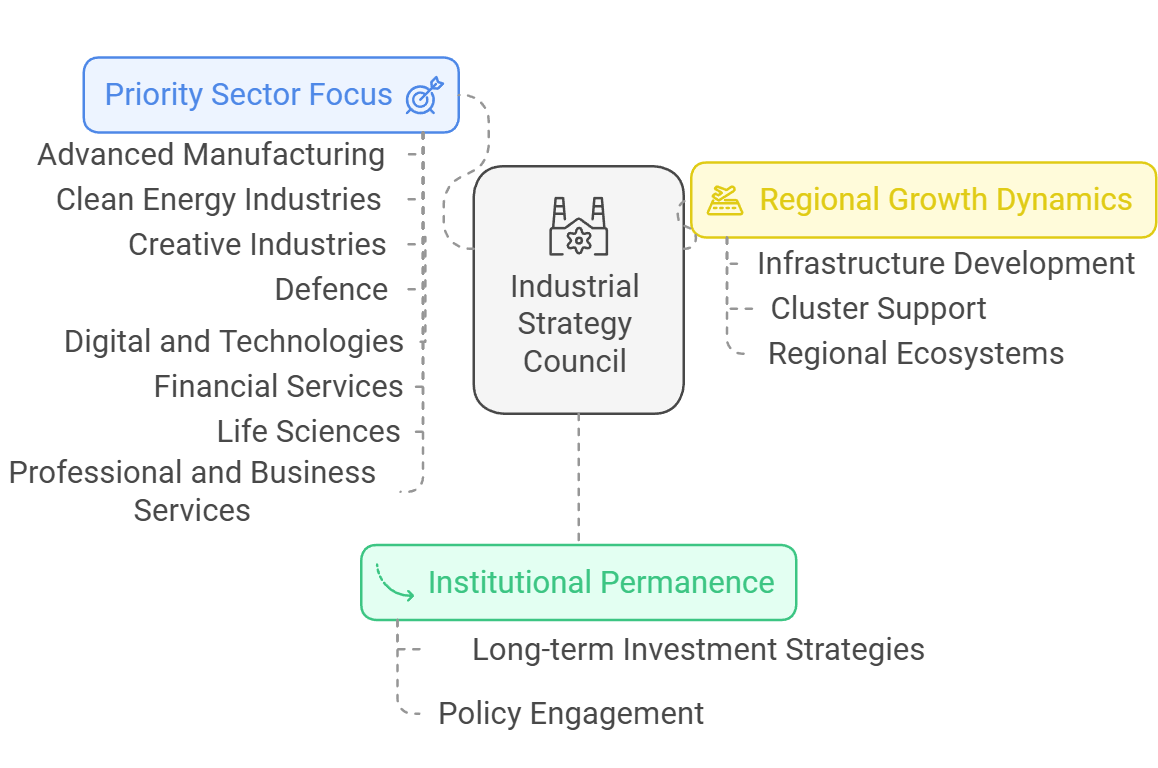
1. Institutional Permanence as a Game-Changer
The creation of a statutory Industrial Strategy Council represents a fundamental departure from previous approaches. This isn't merely another advisory body – it's a permanent institution enshrined in law, designed to outlast political cycles and provide consistent direction for the UK economy.
This permanence transforms the landscape for business planning. Companies can now develop longer-term investment strategies with greater confidence, knowing that the policy framework will remain stable. The Council's statutory nature also ensures that businesses have a permanent channel for policy engagement, allowing them to contribute to and shape the evolution of industrial strategy.
2. Priority Sector Focus
At the heart of Invest 2035 lies a clear focus on eight growth-driving sectors that will receive targeted support. These include advanced manufacturing, clean energy industries, creative industries, defence, digital and technologies, financial services, life sciences, and professional and business services.
For businesses, this sectoral focus creates multiple pathways to benefit from the strategy. Direct participants in these sectors will find new support mechanisms and growth opportunities. However, the opportunity extends beyond direct participation – companies can benefit through supply chain relationships, strategic pivots into priority sectors, or by identifying cross-sector opportunities where their expertise adds value.
3. Regional Growth Dynamics
The strategy's emphasis on place-based development introduces a crucial geographic dimension to business opportunity. The government's commitment to unleashing regional potential goes beyond rhetoric – it's backed by concrete plans for infrastructure development and cluster support.
Companies that understand and leverage these regional dynamics will find themselves well-positioned for growth. This might mean strengthening presence in existing clusters, participating in emerging regional ecosystems, or strategically positioning operations to benefit from improved infrastructure and local support mechanisms.
Strategic Actions for Forward-Thinking Businesses
The window for early mover advantage is now opening. Success will require a careful balance of immediate action and long-term planning.
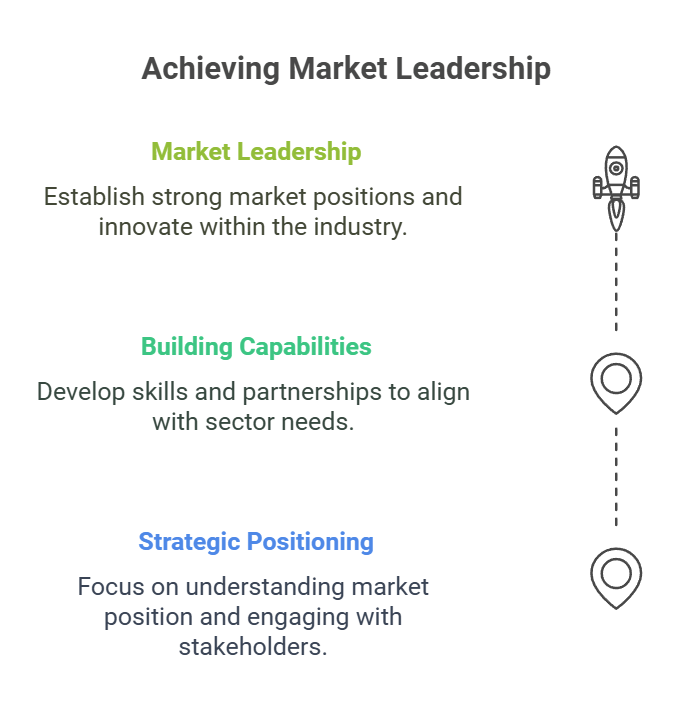
Immediate Priority: Strategic Positioning
In the next 12 months, businesses should focus on understanding their place in the new landscape. This means actively participating in sector consultations, engaging with local growth plans, and building relationships with relevant government bodies. Companies should conduct thorough audits of their current position relative to priority sectors and identify potential growth areas aligned with the strategy.
Medium-Term Focus: Building Capabilities
Looking out to the next three years, the focus should shift to building capabilities that align with sector needs. This period is critical for structuring investment plans around strategic priorities and developing partnerships within priority sectors. Companies should be particularly attentive to skills development, ensuring their workforce capabilities align with sector requirements.
Long-Term Vision: Market Leadership
Beyond three years, the goal should be to establish strong market positions within the new industrial landscape. This means building leadership positions in priority sectors, establishing a strong cluster presence, and developing integrated supply chain positions. Innovation will be key, with successful companies aligning their R&D efforts with sector priorities and leveraging government support mechanisms.
Key Opportunity Areas
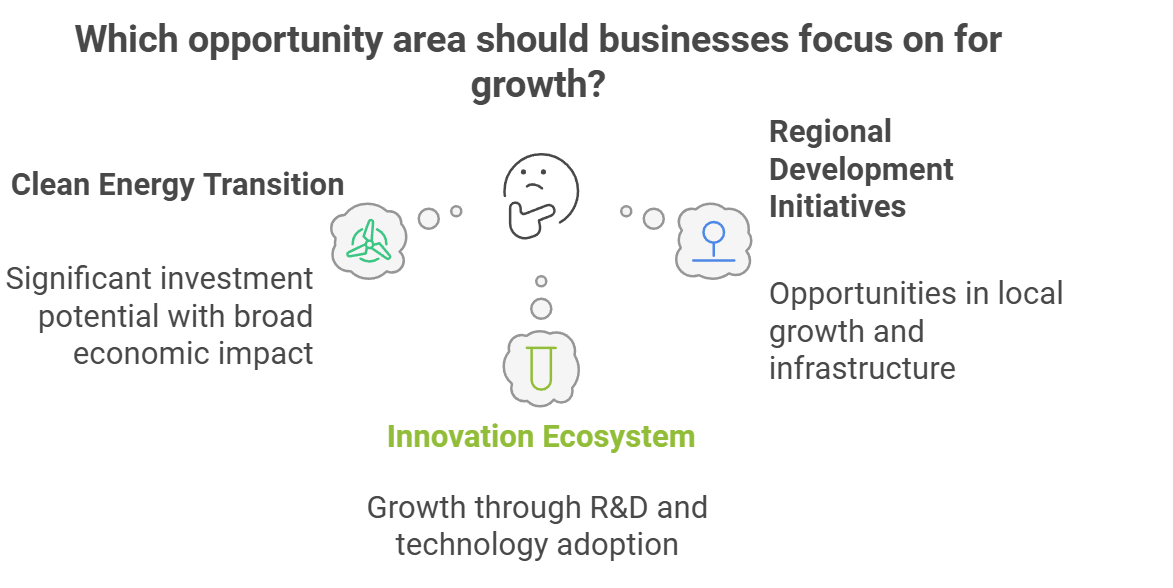
The clean energy transition stands out as a particularly significant opportunity, with estimated annual investment requirements of £50-60 billion through the late 2020s and 2030s. This represents not just a sector-specific opportunity but a transformation that will create ripple effects across the entire economy.
Regional development initiatives present another major opportunity area. The strategy's focus on high-potential clusters and infrastructure investment creates opportunities for businesses to participate in regional growth stories and benefit from local development initiatives.
The innovation ecosystem represents a third key opportunity area. With enhanced support for R&D and technology adoption, businesses that position themselves effectively within this ecosystem will find numerous opportunities for growth and development.
Seizing the Future: First-Mover Advantage
While the full strategy won't be published until spring 2025, businesses that begin positioning themselves now will have a significant advantage. Success will require a combination of strategic foresight, operational flexibility, and sustained engagement with the emerging policy framework.
The key to success lies in understanding that Invest 2035 isn't just a policy document – it's a framework for transformative change in the UK economy. Businesses that recognize this and act accordingly will be best placed to thrive in the new landscape it creates.
New here? Welcome aboard! Join the Focus community to get insights straight to your inbox.
Need help standing out? Let us spotlight your business or service—partner with us.
Do you have a tip, question, or big win? We’re listening! Share it with us, and we’ll feature it.
Looking for expert advice? Our team of public sector pros has your back—get in touch here.
Until next time!
Reply